

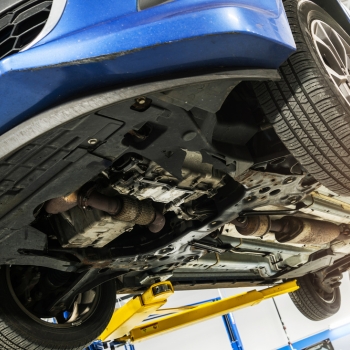
 Your car’s frame is the backbone of its structure, motion and safety. Cracks, dents and other damage ultimately affect how well you maneuver your vehicle and how protected you are in a collision.
At the same time, a damaged car frame doesn’t just impact your own safety. It can also create a hazard for other motorists in varying degrees.
For these reasons, car frames are often straightened following an accident to maintain their structural integrity and protective performance. However, in cases of severe damage, an insurance carrier may declare the vehicle a total loss.
What Is a Car Frame?
Also called a chassis, the car frame functions as your vehicle’s foundation. It creates the overall structure and supports all major parts and systems, providing:
- Impact and vibration protection
- Stress and load resistance
- Weight distribution, stability and maneuverability
- Energy absorption for collision protection
Car frame construction has evolved significantly over the past century. Today’s most common types are:
- Body-on-Frame or Ladder: In this design, the vehicle body is mounted to a separate frame structure using bolts and mounts. Once the dominant construction method, body-on-frame designs became less common starting in the 1970s and are now primarily used for pickup trucks, SUVs and vans. In a crash, the body and frame absorb and distribute the force of impact together, which also makes this design well-suited for towing heavy loads or traveling off-road.
- Unibody: The body and frame are manufactured as a single integrated structure, a design that started gaining traction in the 1960s. This format incorporates crumple zones that absorb and redirect the force of a crash. While unibody frames are lighter and help improve fuel efficiency, significant structural damage from an accident can be more complex to repair.
How Car Frames Experience Damage
With body-on-frame vehicles, a collision often results in a direct dent or deformation of the frame. With unibody vehicles, the force may travel through the structure, collapsing crumple zones and potentially affecting the pillars, strut towers or other structural components.
The most common types of frame damage include:
- A frame crumpling inward, often the result of a head-on or rear-end collision. The frame may shorten and compress surrounding components such as the hood, rails and fenders.
- Misalignment, also called sway or corner damage, which occurs when collision force is applied to one corner of the vehicle.
- A sagging or distorted frame, which can occur when structural components shift or separate following an accident.
In terms of vehicle safety, these issues can lead to:
- Swaying and swerving while driving
- Excessive vibrations
- Uneven or premature tire wear
- Difficulty opening or closing the car’s doors
- Damage to suspension components, including springs, struts and shock absorbers
- Above-average fuel consumption
- Wiring, electrical or sensor issues
- Reduced crash protection
Frame damage isn’t always immediately obvious. After a minor collision or impact with a pole or curb, a vehicle may still appear drivable but begin to vibrate more, ride rougher or produce unusual noises.
At this stage, the following signs may point to frame damage:
- Uneven or abnormal tire wear
- Diagonal tire wear patterns or misaligned wheels
- Bumps, wrinkles or uneven gaps between the doors, hood and trunk
- Drifting or pulling to one side while driving
- Squeaking or rattling sounds while the vehicle is in motion
Repairing a Damaged Car Frame
Most importantly, repairing a damaged car frame restores its structural integrity so that your vehicle can properly protect you in the event of a collision. Without a properly aligned and resilient frame, you and your passengers may face a greater risk of injury during an accident.
Another factor to consider is that many states prohibit operating vehicles considered unsafe or structurally compromised. Driving with a severely damaged frame could result in fines or other penalties. Even if the vehicle appears to be driving normally, a cracked, dented or misaligned frame places additional stress on other systems.
Vibrations affect the transmission and engine, while misalignment may cause parts to wear out faster. Over time, this can lead to more frequent and costly repairs.
Frame straightening addresses this damage by evaluating alignment and applying controlled pressure to specific structural points to restore the vehicle’s original shape and strength. Auto body shops like DaSilva’s perform frame alignment to correct bends, twists, misaligned body panels or suspension issues.
This process helps:
- Provide proper support for body panels, suspension components and the engine
- Restore the vehicle’s ability to distribute crash forces and support proper airbag deployment
- Improve handling, stability, brake performance and overall control
Are you noticing uneven tire wear, a vehicle that pulls to one side or a trunk or door that doesn’t fully close? Your frame may be misaligned or damaged. To have the issue evaluated and repaired, contact DaSilva’s Auto Body to schedule an appointment.


